I like fig scents - especially when they are green and not too sweet, thus emphasizing the fig leaf and the unripe fruit more strongly - but I can only wear them sporadically because their scent character is a bit too specific for me. This one is so far the only exception.
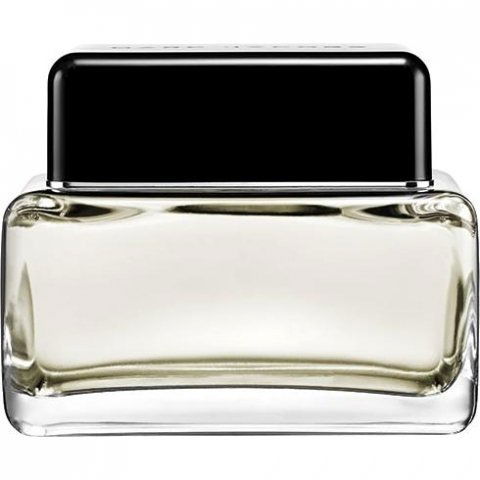
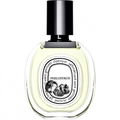
“Marc Jacobs Men” is grassy-fresh with a soft spicy note, slightly woody and delicately coconut-creamy-sweet. Clean, linear, and understated. Very similar to Diptyque's “Philosykos EdT”. However, without its moderate fruity sweetness. Like its casual variant. A bit more reduced. Smoother. A tad more functional perfume than naturalistic imitation.
The theme here is the fig leaf. A fragrance component that experienced a timid bloom around the turn of the millennium - triggered by the first fig scents ever, Giacobetti's “Premier Figuier” (1994) and “Philosykos” (1996) - (Marc Jacobs Men, 2002). Normally, this component is characterized by a combination of fresh-green leaf impressions (usually through the Givaudan molecule ‘Stemone’ or the grass-scented molecule ‘Hexenol’) and lactonic impressions that evoke coconut, cream, milk, etc. (especially through the molecule ‘Gamma-Octalactone’). This exact combination is utilized in Marc Jacobs Men, with the addition of a delicate cardamom spice and a dry wood nuance. Thus, the scent of fig leaves is almost realistically recreated. I say almost, as I feel that due to the tuning, it is a slightly refined, softer imitation. The grass-leaf impression, for example, is not as harsh and sharp as in Philosykos, and the coconut vibe is not as intense.
Compared to other fig-leaf-centered scents from that time, it is certainly the cleanest. For comparison, two more well-known scents, Dior's “Dune pour Homme” (1997) and the very similar - except for the base - “Good Life for Men” by Davidoff (1998, Pierre Bourdon), are decidedly more robust and “masculine” in nature. They lean towards a green, yet more sandy-earthy, somewhat hazy and slightly warmer direction. Nuances of that also appear in Jacobs through the addition of cardamom, but much more subdued. In this respect, I would describe it as a smoothed fig leaf scent. What it lacks to be a ripe fig scent is the fruity sweetness, which is usually created through the aroma of dried plums (e.g., very clearly recognizable in Lubin's “L‘Eau Neuve - Figaro”). However, there is also a slightly bitter orientation in the scent characteristics of fig leaves, reminiscent of the skin of unripe fruits, prominently showcased in Profumum Roma's “Ichnusa” (2000). This feature, however, does not occur in the Jacobs scent.
On the test strip, the impression is even more nuanced: There I have the scent image of a reed (the slight water proximity may be suggested by the aquatic nuance not perceivable on my skin, which is listed in the pyramid), which is covered with a delicate film of white skin cream. This wonderfully cushions the - as already hinted - rather harsh grass characteristic. Thus, the grass tone appears softer and more cared for, without giving up its distinct character. It also avoids drifting into the realm of skincare products. I mention this because at some points this association arises - as it did for me (certainly triggered by Gamma Octalactone) - however, this impression is never dominant in the scent, both on paper and on my skin. The fresh grass tone remains clearly dominant.
This combination also ensures that Marc Jacobs Men - despite its name - feels like a unisex scent to me, as it does not exhibit traditionally dominant female or male characteristics (although coconut is more often associated with female perfumes). Wood and cardamom balance it somewhat towards the masculine side.
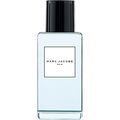
The choice of such a scent character - fig (leaf) scents are an absolute niche in the perfume world - was an absolutely unusual and certainly bold decision for a designer house in that price segment and also for its very first men's fragrance ever (of only four in 20 years!). Possibly comparable to Dior's for Dune pour Homme as a new men's fragrance after a nine-year break, which followed the very successful “Fahrenheit” (the decision for that was certainly equally bold due to the strong emphasis on the violet leaf - and later the iris note in “Dior Homme”). Therefore, from a scent profile perspective, it has a clear niche character, which is also reflected in a rather atypical quality for a designer (except for the slightly generic wood note). Without the pronounced synthetic touch present in later Jacobs scents. For me, it is at least an equivalent substitute for Philosykos. Also in terms of longevity and sillage. Unobtrusive, but perceptible to the immediate surroundings in the first two to three hours. Personally, I find it more wearable, as it is a bit straighter and a nuance less complex and photorealistic than the Diptyque. Closer to the person. A smoothed, “attractive” green fig. Freshly cared for. With an effortless elegance. Thus, it follows the tradition of the brand to predominantly design very clean, unpretentious fragrances that usually focus on one or a few fragrance components, are very slimly composed, and consistently exhibit a noticeable individuality without being off-putting (I think, for example, of the pepper scent “Bang” and the Splash series with scents like “Rain,” “Pomegranate,” etc.). One might say: It is the Bauhaus edition of Diptyque (referring to the design style). A scent for every day. Uncomplicated in scent profile and yet special. Not one that touches my soul - it is too clean and functional for that - but it does get under my skin a bit. A really well-made and well-balanced perfume (Ralf Schwieger; his third, among others after Malle's "Lipstick Rose").
For all fig lovers, I see it as a worthwhile test. However, the scent is no longer produced, but can still be found online from time to time at reasonable prices.
Note:
Another successful fig leaf scent from that golden age, in my opinion, is Hermès' “Un Jardin en Méditerranée” (2003). It combines the fresh-green and sandy-herb aspects of the scent note.
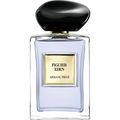
Noteworthy representatives from more recent times are, in my view, especially Arte Profumi's “Figo Moro” (2017), which also emphasizes both characteristics and is positioned between Premier Figuier and Philosykos in terms of the grass-leaf impression, while also exhibiting a very subtle coconut creaminess, and Armani's “Figuier Eden” (2012, Christine Nagel), where no fig leaf is listed as a component, but green fig and grass are, which creates the same effect. Those who prefer it more bitter might find what they are looking for in Heeley's “Athenean” (2021), which to me personally is initially a bit too dull and turpentine-like (Galbanum), before later developing a slight nuttiness and subtly creamy coconut sweetness.
Finally, two more notes:
Firstly, on the noteworthy video by Siebter about this scent further down, and secondly, on the interesting blog “Journey through the Fig Grove” by Andin, in which many fig scents are described in a personal reflection.