

Trollo
9 Reviews
Translated · Show original

Trollo
Very helpful Review
12
The Femme Fatale of Guerlain or How a Fragrance Can Thematize a Literary Character
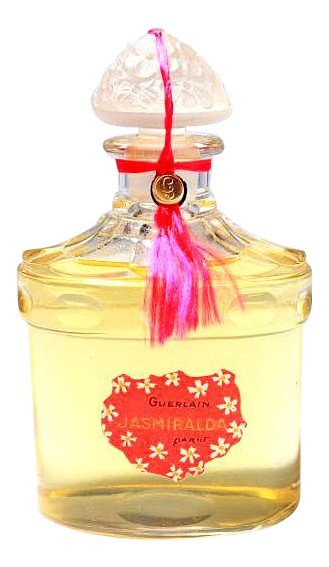
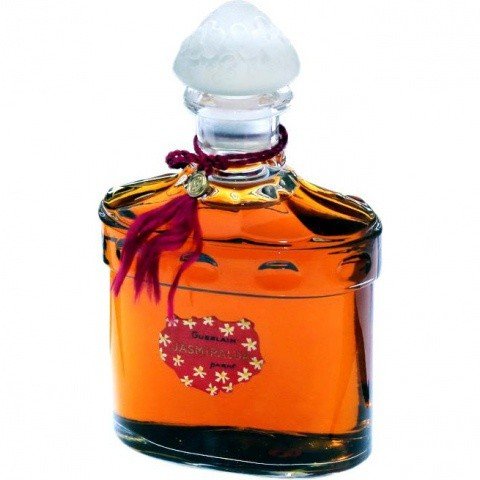
Narcisse Noir by Daltroff is considered by many to be the epitome of a fragrance for the femme fatale. In its original version, the black daffodil boasts a significant dose of indole through daffodil (supported by jasmine and especially orange blossom) and a lot of animalic notes through civet and musk. Jasmiralda is able to enhance this animalic quality as well as the indole of Narcisse Noir at the beginning.
In the opening, jasmine is present, VERY present, as is the supporting orange blossom. It creates an almost fleshy impression of white flowers, particularly due to the immediately erupting animalic quality, especially of the musk. Deer musk is mentioned in the fragrance pyramid, and that could be; an old vintage sample of the slightly older Après l’ondée in its first formulation had slight similarities. (A minimal similarity could also have been created by the mentioned Bouvardia, which I couldn't identify individually, but is listed in both fragrance pyramids.)
In addition, amber gives the fragrance depth, and civet only intensifies the animalic aspect. At the same time, a gentle resin (benzoin) can already be felt. The vanilla certainly contributes a good portion of the sweetness of this fragrance and remains linear, even with a rather surprising sudden change of direction in Jasmiralda: Suddenly, the violet is there, it is simply there, very noticeable, just like the rose. They were probably there all along but were pushed aside and obscured by indole and animalic notes. Jasmine is a constant companion, but only that, just like the only latent animalic quality. Some woody vetiver certainly contributes to the calming effect. Tonka gradually rises, while the benzoin continues to flatten out, making way for vetiver and tonka. Tonka merges with the woody accord, while the mentioned moss rather just provides a subtle background and grounds the fragrance.
Jasmiralda is not just simply (like) a femme fatale with a Guerlain touch. "Jasmiralda" is said to be composed of "jasmine" and "Esmeralda," thus referencing the female character from Victor Hugo's The Hunchback of Notre Dame. Like the literary character, Jasmiralda has numerous facets and qualities that one would never suspect at first glance: She does not transform into the "innocent from the countryside," she remains sensual, but no one would have guessed behind the striking beauty at the beginning this noble, restrained, and actually everyday sensuality - both need the chance to unfold "in normal life." Esmeralda did not get that chance in Hugo's novel - and ultimately neither did Jasmiralda; she was taken off the market decades ago.
In the opening, jasmine is present, VERY present, as is the supporting orange blossom. It creates an almost fleshy impression of white flowers, particularly due to the immediately erupting animalic quality, especially of the musk. Deer musk is mentioned in the fragrance pyramid, and that could be; an old vintage sample of the slightly older Après l’ondée in its first formulation had slight similarities. (A minimal similarity could also have been created by the mentioned Bouvardia, which I couldn't identify individually, but is listed in both fragrance pyramids.)
In addition, amber gives the fragrance depth, and civet only intensifies the animalic aspect. At the same time, a gentle resin (benzoin) can already be felt. The vanilla certainly contributes a good portion of the sweetness of this fragrance and remains linear, even with a rather surprising sudden change of direction in Jasmiralda: Suddenly, the violet is there, it is simply there, very noticeable, just like the rose. They were probably there all along but were pushed aside and obscured by indole and animalic notes. Jasmine is a constant companion, but only that, just like the only latent animalic quality. Some woody vetiver certainly contributes to the calming effect. Tonka gradually rises, while the benzoin continues to flatten out, making way for vetiver and tonka. Tonka merges with the woody accord, while the mentioned moss rather just provides a subtle background and grounds the fragrance.
Jasmiralda is not just simply (like) a femme fatale with a Guerlain touch. "Jasmiralda" is said to be composed of "jasmine" and "Esmeralda," thus referencing the female character from Victor Hugo's The Hunchback of Notre Dame. Like the literary character, Jasmiralda has numerous facets and qualities that one would never suspect at first glance: She does not transform into the "innocent from the countryside," she remains sensual, but no one would have guessed behind the striking beauty at the beginning this noble, restrained, and actually everyday sensuality - both need the chance to unfold "in normal life." Esmeralda did not get that chance in Hugo's novel - and ultimately neither did Jasmiralda; she was taken off the market decades ago.
6 Comments


Jasmine
Neroli
Bergamot
Orange
Benzoin
Civet
Deer musk
Rose
Violet
Vetiver
Vanilla
Amber
Tonka bean
Moss