


Mungo fights his way through the jungle. His machete is like a natural extension of his arm, the monotonous up and down of the strikes resembles his heartbeat. When he stops striking, stops moving, will his heart stop beating too? Thoughts that arise from the fever. Thoughts that need to be banished.
He is alone, the only one left from his expedition. All the others are gone, dead or deserted. Or perhaps they have simply dissolved, become jungle, become earth, become clay. The former is excusable; there are many ways to die here. Small and large, poisonous and hungry, one wrong step, the arrow of a native, and of course the fever that sooner or later haunts everyone. Deserting, however, is inexcusable; it is betrayal to the king and even worse, to science. And simply dissolving? His thoughts drift away again, the fever burns bright.
But he is close, he feels it. This hill is his goal. The natives' clues were clear, bought with his compass. But he is at the destination, he no longer needs it. The underbrush becomes sparser the higher he climbs. And then he sees it, standing up there, the holy tree. It is exactly as the books describe it, the ideal of a tree. Deep in his feverish brain, he knows that there cannot be an ideal in this world, but here and now it appears to him as such.
His dream has become reality. He approaches it, tentatively extends his hand, and touches the trunk. His hand feels hardly any resistance, it goes straight through the wood. Rotten, decayed, eaten by fungi, the dream turns into a nightmare. Now he recognizes his mistake; the fever veil lifts briefly and he collapses before the dead tree. In his misery, he slowly becomes aware that he is surrounded by an indescribable scent. Fresh and spicy, of dry wood and the leather of animals.
And as he sinks down, a warm sense of security envelops him, and he finds peace on a soft bed of earth and leaves. And he thinks he feels drops. Like rain drumming on the leaves and on his skin. It is like music.
---------------------
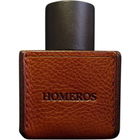
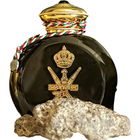
Homeros is a very dense fragrance and as partially correctly noted on the Ensar homepage, it is "not a perfume where you remove the top notes to reveal the heart note." Partially, because Homeros does indeed have a distinct top note and a base for me, only the transition in between blurs a bit.
It starts relatively fresh with bergamot and rather light, dry wood. Although the freshness comes more from the woods than from the bergamot. The dark green, slightly bitter peel is more pronounced from the latter. At the same time, quite dark, resinous, animalistic, and spicy notes are immediately recognizable. Something slightly creamy resonates along with robust leather. This is really strong, not only in the sense of good (which is a matter of taste), but in the sense of being present, filling the space. Floral and fruity notes are added, but they are absolutely subordinate and make the spicy-woody-resinous-animalistic mixture at most a bit softer. In this sense, I would not even speak of a heart note, as the fragrance remains in this state for hours, only the fresh notes bid farewell.
Only towards the base does more happen in the fragrance development. It becomes earthy and clay-like, which is probably due to the oud and perhaps partly to the patch. Patch and tobacco provide a dark green note. And in my nose, a sharp-fresh note comes through again, as if the civet is stepping on the gas once more. The animalic aspect becomes even more pronounced with a good shot of musk, which comes across here as subtly sweet, warm, and humanly close. Overall, I perceive the animalic aspect throughout the entire fragrance journey as very pronounced, but never too much or even off-putting.
Homeros is a very high-quality, animalic oud that I find absolutely wearable. Whether it is in Plato's sense the ideal of an oud fragrance, I do not dare to judge; in any case, I thank Floyd for the opportunity to get to know this scent.
---------------------
Historical note and an anecdote:
History: The little story above refers to Mungo Park, a Scottish explorer and adventurer who never went to Asia during his lifetime but dedicated himself to the exploration of Africa, specifically the course of the Niger (entertainingly recounted in "Water Music" by T. C. Boyle). He stands as a representative of a now-extinct species of people who, completely oblivious and trusting in God, and untainted by doubts about their own superiority, plunged into absurd adventures to fill in the white spots on maps with some color. This is hardly imaginable today, also because there are no more white spots on the map.
Anecdote: during my testing of Homeros, after about 4 hours, my wife came into the room and said my laptop was overheating, something smelled strange. For a brief moment during the test, there was a slight sensation of smoke, but so subtle that I don't find it worth mentioning. So I probably shouldn't wear the scent at home, which at least keeps me from having to think about financing...
Updated on 03/21/2023