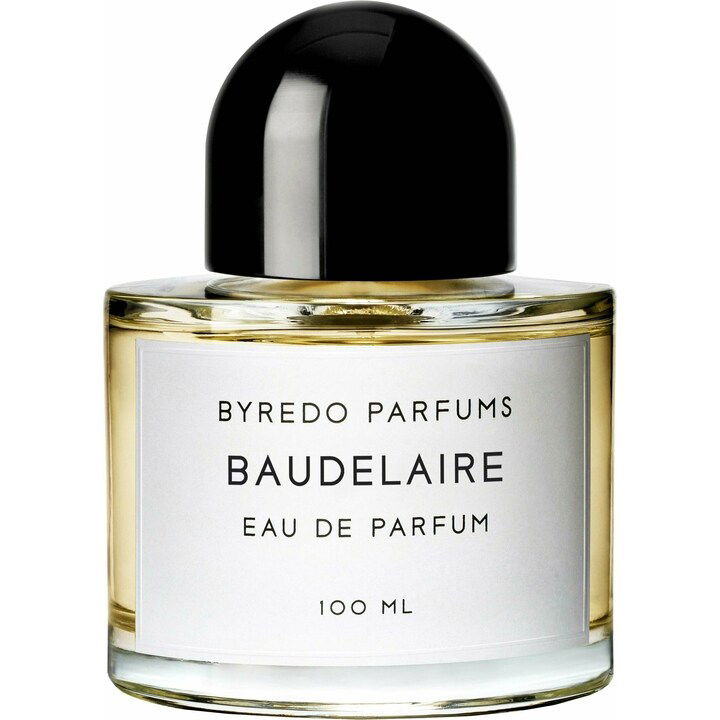


 Top Notes
  Black pepper
 Juniper berry
 Caraway
 Heart Notes
  Frankincense
 Leather
 Hyacinth
 Base Notes
  Papyrus
 Patchouli
 Black amber



FvSpee
323 Reviews
Translated · Show original

FvSpee
Top Review
39
Forget Baudelaire!
A successful perfume as a total work of art that resonates with the spirit and soul is not only about the fragrance itself but almost equally about its accidentals: its color, the shape and material of its bottle, and its packaging. It is no different from a good meal, which, to provide the perfect enjoyment, should not only have the right flavor composition but also appealing form and color, and should be presented on a beautiful plate.
The name of the fragrance is also part of these accidentals. It awakens expectations, fuels our imagination, and directs our olfactory perceptions in a certain direction. In the case of Byredo's "Baudelaire," this was, as the comments and statements show, exemplarily the case.
The life of the French poet, critic, and translator Charles Baudelaire was a hellish ride of physical and mental illnesses, alcohol and drug abuse, experiences of failure in work and love, and ultimately poverty, misery, and death. In his work, Baudelaire grapples with these experiences; it can be read partly as a rebellion against the forces of darkness and destruction, as an attempt at self-therapy, but also as a flirtatious game at the edge, as an affirmative or at least resignative celebration of a corrupted beauty. The titles of two major works by the namesake of this fragrance speak for themselves: "Les fleurs du mal" ("The Flowers of Evil") and "Les paradis artificiels" ("The Artificial Paradises" - On Drug Experiences). His poem "Spleen" is a quintessential literary depiction of severe clinical depression.
The overwhelming majority of the reviews here refer to this and attest to "Baudelaire" predominantly extremely disturbing, abyssal, dark, and almost self- and other-murderous qualities. With their own unique emphases, one can (just exemplarily) refer to the linguistically and descriptively analytical literary miniatures by Cravache, Ergreifend, and Turandot, which rightly carry the predicate "first-class." However, a significant difference becomes apparent: the first two appreciate the horror: Cravache perceives decaying corpses, Ergreifend feels how their soul is being drained, and both honor this with top ratings. Turandot, on the other hand, recoils from the abyss, rates the fragrance low, but apologizes to us for her supposed nervous weakness.
I consider this approach to "Baudelaire" legitimate and fruitful, but not obligatory. I advocate for opening an alternative access to this fragrant work of art, which may require us to boldly sever the ties that bind us to its name and first forget everything we have ever heard about the sad Charles.
This could lead us - as is the case for me, and in quite rare olfactory harmony also for the nose beside me - to perceive this fragrance as immensely beautiful, and while excitingly special, contrasting, and rich in tension, not as disturbing, neither in terms of the perception of individual foul-smelling notes nor in terms of dissonances in the composition.
I perceive an initial phase of about half an hour or a bit more, which I understood during the first "full test" rather as a dry, strong, distinctly unsweet spiciness, to then experience on the next attempt the following day a still unsweet, somewhat bitter, and surprisingly fruity tone. The main phase lasting several hours, during which I believe no single note dominates, impresses me as serious, contrasting, and dynamic, yes, a bit cool and perhaps even dark, but certainly also powerful and energetic. When the fragrance pyramid indicates hyacinth, leather, and incense here, I take that at face value and believe that the juniper berry from the top note and the spicy-fresh amber and probably also papyrus (without knowing exactly how that smells) already play into this overall impression, as the head and heart notes here congenially transition into one another. However, this is somewhat less the case with the transition from the heart note to the stable, still gently perceptible at medium dosage after 14 hours, strongly patchouli-influenced base. I find this very pleasant, but in comparison to the previous dynamic events, it falls off a bit too strongly. That is very nice and very serene, but no longer exciting, which takes away the chance for a top rating for this fragrance.
Three fragrances that I really like and consider "related" to this scent - however, rather freely associating in terms of a distant spiritual kinship and certainly not in the sense of "fragrance twins" - are "Dior Homme" (minus its deep, rich softness; instead harder, cooler, and more open), "Ambre 114" by "Histoire des Parfums" (minus its overwhelming opulence, but stricter, more reduced, and concentrated), and "Heritage" by Guerlain (minus its sparkling-playful citrus freshness in the top note, but much more frontal) - overall, I find "Baudelaire" quite guerlinesque.
The elimination of all associations connected to the life and work of the poet could then further lead to this beautiful, powerfully driving, and serious fragrance evoking entirely different images and values than hell and demons. This severing of the umbilical cord to the name "Baudelaire" could result in us not thinking at all about vampires, corpses, decay, and misery when experiencing this fragrance. I did not have to. During testing, very bright and humanistic impulses came to me, such as the brave pursuit of hidden beauty and humanity and the calm and steady struggle against suffering and malice.
And, just on the side, we are allowed to do this! We are not morally obliged to search for any traces of decadence and illness in this fragrance. We do not even have to necessarily read Baudelaire's works (although their beauty and value should not be denied)! We are even allowed to do this without feeling like we have to sneak away, being softies, shadow parkers, and warm showerers. Because even those who are ready to face human misery in all its seriousness and irreducible greatness do not have to be a friend of its literary or olfactory poetization.
But did I not say at the beginning that the name is inseparably linked to the fragrance? Well, let us imagine that Byredo wanted to lay an ironic false trail with the naming "Baudelaire." Or that it is not even Charles Baudelaire who is meant, but the (so far completely unknown) brave firefighter Jean-Pierre Baudelaire from the Parisian suburbs, shining through everyday heroic deeds.
The name of the fragrance is also part of these accidentals. It awakens expectations, fuels our imagination, and directs our olfactory perceptions in a certain direction. In the case of Byredo's "Baudelaire," this was, as the comments and statements show, exemplarily the case.
The life of the French poet, critic, and translator Charles Baudelaire was a hellish ride of physical and mental illnesses, alcohol and drug abuse, experiences of failure in work and love, and ultimately poverty, misery, and death. In his work, Baudelaire grapples with these experiences; it can be read partly as a rebellion against the forces of darkness and destruction, as an attempt at self-therapy, but also as a flirtatious game at the edge, as an affirmative or at least resignative celebration of a corrupted beauty. The titles of two major works by the namesake of this fragrance speak for themselves: "Les fleurs du mal" ("The Flowers of Evil") and "Les paradis artificiels" ("The Artificial Paradises" - On Drug Experiences). His poem "Spleen" is a quintessential literary depiction of severe clinical depression.
The overwhelming majority of the reviews here refer to this and attest to "Baudelaire" predominantly extremely disturbing, abyssal, dark, and almost self- and other-murderous qualities. With their own unique emphases, one can (just exemplarily) refer to the linguistically and descriptively analytical literary miniatures by Cravache, Ergreifend, and Turandot, which rightly carry the predicate "first-class." However, a significant difference becomes apparent: the first two appreciate the horror: Cravache perceives decaying corpses, Ergreifend feels how their soul is being drained, and both honor this with top ratings. Turandot, on the other hand, recoils from the abyss, rates the fragrance low, but apologizes to us for her supposed nervous weakness.
I consider this approach to "Baudelaire" legitimate and fruitful, but not obligatory. I advocate for opening an alternative access to this fragrant work of art, which may require us to boldly sever the ties that bind us to its name and first forget everything we have ever heard about the sad Charles.
This could lead us - as is the case for me, and in quite rare olfactory harmony also for the nose beside me - to perceive this fragrance as immensely beautiful, and while excitingly special, contrasting, and rich in tension, not as disturbing, neither in terms of the perception of individual foul-smelling notes nor in terms of dissonances in the composition.
I perceive an initial phase of about half an hour or a bit more, which I understood during the first "full test" rather as a dry, strong, distinctly unsweet spiciness, to then experience on the next attempt the following day a still unsweet, somewhat bitter, and surprisingly fruity tone. The main phase lasting several hours, during which I believe no single note dominates, impresses me as serious, contrasting, and dynamic, yes, a bit cool and perhaps even dark, but certainly also powerful and energetic. When the fragrance pyramid indicates hyacinth, leather, and incense here, I take that at face value and believe that the juniper berry from the top note and the spicy-fresh amber and probably also papyrus (without knowing exactly how that smells) already play into this overall impression, as the head and heart notes here congenially transition into one another. However, this is somewhat less the case with the transition from the heart note to the stable, still gently perceptible at medium dosage after 14 hours, strongly patchouli-influenced base. I find this very pleasant, but in comparison to the previous dynamic events, it falls off a bit too strongly. That is very nice and very serene, but no longer exciting, which takes away the chance for a top rating for this fragrance.
Three fragrances that I really like and consider "related" to this scent - however, rather freely associating in terms of a distant spiritual kinship and certainly not in the sense of "fragrance twins" - are "Dior Homme" (minus its deep, rich softness; instead harder, cooler, and more open), "Ambre 114" by "Histoire des Parfums" (minus its overwhelming opulence, but stricter, more reduced, and concentrated), and "Heritage" by Guerlain (minus its sparkling-playful citrus freshness in the top note, but much more frontal) - overall, I find "Baudelaire" quite guerlinesque.
The elimination of all associations connected to the life and work of the poet could then further lead to this beautiful, powerfully driving, and serious fragrance evoking entirely different images and values than hell and demons. This severing of the umbilical cord to the name "Baudelaire" could result in us not thinking at all about vampires, corpses, decay, and misery when experiencing this fragrance. I did not have to. During testing, very bright and humanistic impulses came to me, such as the brave pursuit of hidden beauty and humanity and the calm and steady struggle against suffering and malice.
And, just on the side, we are allowed to do this! We are not morally obliged to search for any traces of decadence and illness in this fragrance. We do not even have to necessarily read Baudelaire's works (although their beauty and value should not be denied)! We are even allowed to do this without feeling like we have to sneak away, being softies, shadow parkers, and warm showerers. Because even those who are ready to face human misery in all its seriousness and irreducible greatness do not have to be a friend of its literary or olfactory poetization.
But did I not say at the beginning that the name is inseparably linked to the fragrance? Well, let us imagine that Byredo wanted to lay an ironic false trail with the naming "Baudelaire." Or that it is not even Charles Baudelaire who is meant, but the (so far completely unknown) brave firefighter Jean-Pierre Baudelaire from the Parisian suburbs, shining through everyday heroic deeds.
12 Comments







 Static
 reachy
 KimJong
 ElAttarine
 Ergoproxy
 Chizza
 CharlAmbre
 LeSentier
 Mefunx
 ChopIsland