Translated
Show original
Show translation
![RobGordon]()
RobGordon
Top Review
42
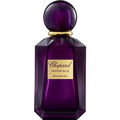
Morillas in the fog!
This article is not about the extinct genus of mountain gorillas but about the extinction of affordable and at the same time successful designer fragrances in a world of fragrances threatened by returns.
Honey chords in fragrances like to obscure my view of the things I want to get to the bottom of, which is equivalent to fogging. Prominent examples would be Vermeil PH or his model, L'Envol, not quite so dramatic in Chergui, but I often get the impression that the scent molecules are pushed together by high pressure pasteurization, disfigured beyond recognition and hang like a cloudy, sticky veil over the scent.
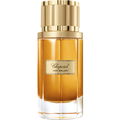
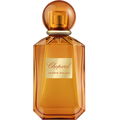
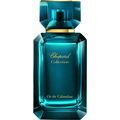
My knowledge of French corresponds exactly to my expertise in the Finnish language. "Honey from Arabia" could have been a warning to me, I didn't take the time to translate the name or read the notes when ordering. I had to send a ALzD order quickly with perfume sample requests and then I thought of the Chopard newcomers, of which I chose a blind one.
A short praise for the team around AlzD, who promptly incorporated my wishes and sent them on the same day. The service can really be seen and no, the contribution is not sponsored.
For all I care, the fragrance could have been called "Lawrence d'Arabie" and bottled without the bee drool. But Mr. Morillas manages the almost impossible, that a cameo honey prelude doesn't really bother me. On the test strip it almost completely goes under and the spicy aromatic green tone is almost even more present than in the course on the skin.
Exceptionally a recommendation to test this smell in any case also on the strip. The same applies to the presence of the touch of iris, which I perceive most likely as a nuance of a dusty primer also only on paper. Iris lovers have no reason to fall into ecstasy with this fragrance.
But let's take it one at a time. The corpus is formed by a rose covered almost beyond recognition, which has been carefully sprinkled with incense and gently dabbed dry with resin tones. In order for the concept not to appear banal, green, delicately spicy, very present ethereal notes are added, which essentially contribute to the airiness in the overall picture of the aroma and so effortlessly pull this covered rose out of the camp of oppulence. All this is contrasted with a fine fruity acidity almost throughout the whole process. After reading in which direction I should think, a pomegranate adjustment seems quite plausible.
The result is discreetly fruity, sour, spicy and bulky, flowery, in short highly aromatic and the most important thing, not synthetically exhausting, which is written on the forehead of many modern fragrances, at the latest after several hours of wearing. A wonderful connection is created on the skin and in the projection, dancing along the ridge of the unisex path in perfect balance. I hardly ever use attributes like "sexy", but this fragrance triggers the desire to include such a vocabulary in the text. It is also not often that a fragrance "shines" aromatically on the strip for my sensation.
It's never about starting hype trains (free of charge), but I like to share my pleasure in this fragrance. It only took 24 years for Chopard to stir another fragrance that touches me as much as "Heaven" or "Bogner Man" once did in 1990, although they have nothing in common, except perhaps a comparably sophisticated aura that works here for man and woman alike.
In front of my keyboard there is the strip that sprays its aroma like a pulse and robs me of my senses. Despite the sensual olfactory attack on my center of reason, it is certainly not a holy grail among fragrances.
There will never be a fragrance, whether niche or designer, on which the fragrance community will ever agree. I think this is a very important aspect that you should never lose sight of during your own fragrance journey. Individual tastes and, of course, the possibilities of a financial nature simply diverge too much.
For me it is just an exciting designer fragrance with comparable potential of some 90s fragrances, which marketing has pushed into the exclusive line and you want to see 275€/100ml for it. The scent itself can't help it. Therefore I do not search desperately for reasons to soften the smell impression gained by myself.
I dare, however, to publicly doubt that tripling the price to underline the exclusivity of this fragrance would make more sales than if it were offered for sale in the 90-100€ class with every chain. Even at the risk of being smelled on every corner. Which makes me less interested in wearing a perfume.
The fragrance has everything perfume needs for me. The character of the projection is harmonious, it nestles wonderfully to the skin. It is versatile in terms of applications and not limited to one season, not too loud, not too quiet and hits my nerve perfectly. In almost 5 years here on Parfumo, I have always wound myself to give away a 10.
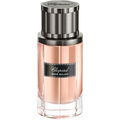
I clearly lack the reasons not to do it this time. The 10 gets the fragrance anyway not because of its presentation but despite its presentation.
There's one thing I'd like to get off my chest:
The manageable rendezvous of honey in the prelude or as a poetic namesake does not even make this fragrance a half-gourmand, those who need dirty notes to underline sexyness are also on the wrong steamboat here. In other places on the Internet a teen note is listed. Fortunately, I look for these in vain.
If Chopard Marketing wanted to give me this fragrance, it would be well received by its recipient.





 Provençal honey
 Copaiba balsam
 Frankincense
 Bulgarian damask rose
 Cypress
 Patchouli
 Pomegranate
 Siam benzoin
 Iris
Iris Labdanum
 Mauritian pink pepper




 Slowdive
 Scentista