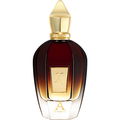
Actually, I didn’t want to write any more reviews. But as it often goes with “actually,” one is unexpectedly overwhelmed by a fragrance in the most positive sense, so that the 140 character limit simply wouldn’t suffice to do the scent justice.
So far, I have only been able to test a few of the many Henry Jacques fragrances. What they all have in common is that they are very finely and elegantly composed. There hasn’t been a “loud” or even “screaming” scent among them so far.
I was all the more curious about how they would tackle the often challenging theme of “white florals.” After all, they are often a guarantee for being too much and difficult to wear.
But Henry Jacques wouldn’t be Henry Jacques if he hadn’t navigated this challenge with his usual elegance.
The tuberose is certainly present from the very first second. But not overwhelming and suffocating; rather, it is fine, delicate, yet self-assured. A hint of almond/marzipan aroma accompanies it. From somewhere, there also comes a nearly fresh, slightly bitter note. It might come from hawthorn or clove; I can’t pinpoint or explain it exactly. In any case, this note doesn’t completely hold back the tuberose but tempers its overly penetrating quality.
All the other flowers are somehow there but not distinctly recognizable. It’s more like a retinue surrounding the tuberose, naturally not wanting to steal the show from the star.
Gradually, delicate, resinous threads of benzoin weave through the scene, ensuring that the sweetness of the flowers cannot dominate.
Powdery iris mist and yellow-gold shimmering vanilla round off the scent experience, enveloping the tuberose and its entourage like a protective cocoon.
And so, this scent conglomerate lingers on my skin for a good 12 hours, merging with it and forming an infinitely soft, delicate, fine, and effortlessly elegant scent melt.
Nothing bites in the nose here, nor does any of the fragrance notes stand out unpleasantly. Despite the many white florals, only a moderate or very slight sweetness emerges, which appears very muted, just enough for the fragrance.
I must admit that I have never smelled tuberose in this form, and I am truly impressed by how perfumers manage to blend such “difficult” fragrance notes so harmoniously.
Conclusion: A tamed floral dream of sublime beauty and quality that works more with subtle means, thereby excluding all loudness as a matter of course. Furthermore, it does not rush ahead of the wearer but rather forms something like a second skin. A fragrance more for oneself, yet still perceived by the environment. Myosotis is indeed marketed as a women’s fragrance (the feminine aspects are undeniable), yet I can also imagine it on men, as it is not a “tuberose bomb.” I myself would certainly want to wear it with the greatest pleasure from time to time.
Unfortunately, everything beautiful also has its price (15ml perfume / €600, 30ml perfume / €960, and 75ml extrait de parfum / €600). Of course, the question arises whether such prices fit into today’s world, where inflation, skyrocketing energy costs, and the Ukraine war have changed all our lives so much. Surely, one could do a lot of good with that money, alleviating need and hunger (even here in Germany). Additionally, there are people who have to make a living from such sums. Is it therefore morally reprehensible or even perverse to demand or spend such amounts for a fragrance? Difficult. A large part of the price is certainly attributable to the extremely high-quality fragrance materials, and another part could stem from the desire to maintain the exclusivity of the fragrances. As arrogant as it sounds, perhaps the broad masses are not meant to enjoy these scents. It certainly cannot be due to marketing, as I have not heard the name Henry Jacques anywhere so far (though I do not move in the circles of the upper echelons, where it may be different). In any case, it is a fact that the luxury goods industry continues to record steadily growing sales and profits despite everything. And a Bernard Arnault is not the richest person in the world by coincidence. Unlike Louis Vuitton, Prada, Chanel, etc., Henry Jacques does not operate in a flashy manner. Rather, it is a kind of quiet luxury. And I believe everyone must personally decide whether such a fragrance is necessary. Fragrances convey a sense of well-being and comfort, can provide solace, and perhaps especially in such “dark times” as these. Therefore, there is no right or wrong. What is allowed is what pleases and does good for each individual.
Feel free to be yourself!


 Top Notes
 Hawthorn
 Jasmine
 Ylang-ylang
 Heart Notes
 Clove
 Orange blossom
 Tuberose
 Base Notes
 Iris
 Siam benzoin
 Vanilla
 Myosotis






 Liberrita
 ElAttarine
 Marieposa
 Axiomatic
 Gandix