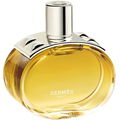
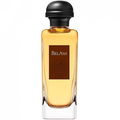
After Madame Christine Nagel unexpectedly added the beautiful
Musc Pallida Eau de Parfum to
Musc Pallida Essence de Parfum at Hermès this year, one might perhaps have expected
Cardamusc to follow as an Eau de Parfum…next year…instead.
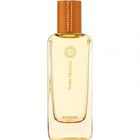
In quiet Hermès fashion, Ginseng Biloba has now been launched unexpectedly. The only official listed ingredients are ginseng and ginkgo. Do these fit the yellow coloring? A look at the underside of the packaging reveals the “full INCI list”, and things look quite different then. Marketing?!
The opening is recognizably sharply bitter green, galbanum-like and floral, dominated by narcissus, possibly a challenge? I immediately thought of
Eau de Narcisse Bleu and
Grey Flannel Eau de Toilette…and simultaneously thought: “What is this supposed to be?”
The overall olfactory impression does not change dramatically. The yellow-floral facets of real narcissus reveal themselves (wonderful thanks to a touch of bodily dirtiness) along with something creamy buttery green and ylang-ylang-like. According to the INCI list, there is also some rose oil, which might be responsible for the slightly soapy impression? The scent-defining green herbal facet may be represented by the idea of the ginkgo leaf, supported in its almost cool clarity by juniper, geranium and citrus oils (INCI list), while something clove-like may reinforce an undefined sharpness. The fragrance remains bright and does not darken significantly, which fits the coloring. Although the fragrance feels somewhat awkward or unusual in character, the friendly (yellow) light lends it a modern, buoyant and optimistic lightness.
Ginseng roots apparently smell only faintly, slightly bitter, vegetal, earthy and woody, and can be reminiscent of radish, which can be confirmed in the olfactory impression. There is no doubt something Asian about it, and in this mood one might also think of green tea and wasabi. As it develops, the woody character becomes stronger, the fragrance grows softer, almost slightly creamy, and lets the sharpness fade. Nevertheless, the character does not fall apart, Ginseng Biloba remains somewhat awkward and fortunately I detect none of the familiar synthetic base notes.
In short: Vegetal earthy, woody, green, floral & gently bright with a slight bitter sharpness.
Ginseng Biloba is considerably more intense and longer-lasting (we are in 2026) than Eau de Narcisse Bleu, which I like very much…its specific, gently powdery soft character is missing, that character of old hotel soap as I would personally describe it. The angular opening of Ginseng Biloba and its overall character may feel more like the old model Grey Flannel, which in direct comparison clearly seems “older & more masculine”. I have a bottle here, but I never managed to truly like it, which I always found particularly unfortunate based solely on the name and the wonderful bottle (especially in the 240 ml splash version). For me, Eau de Narcisse Bleu and Grey Flannel have always belonged together.
Ginseng Biloba strikes me as a contemporary interpretation in which the proportions have been shifted in favor of a more unisex idea of perfume. Nevertheless, the word "classic" remains. It smells "noble, luxurious & expensive." The green vegetal sharply bitter aspects fit a modern lifestyle idea of green tea, wasabi and light woods. Ginseng & ginkgo in the name may indicate the intended Asian target audience - where Hermès is already very popular - and fit perfectly with the restrained style of the Hermès brand.
I am pleased by the continuation of the subtly bold Hermès style...I like the result...and yet I still wonder about the discrepancy I perceive between the name with its listed ingredients and the actual olfactory character, if one knows the old fragrances as I do. Madame Nagel surely knows them, the question remains: "Why, what was the idea?" Since this could perhaps be confusing, Hermès is nevertheless inviting us on journeys of the mind, and that in turn fits Hermès perfectly.


 Ginseng
 Gingko



 Merlotsupern
 icemanjr
 Caroleanne81
 ElAttarine
 Gandix