

Coutureguru
237 Reviews

Coutureguru
Very helpful Review
6
Beautiful madness ...
Shakespeare's Ophelia is a tragic character, having gone quite mad after Hamlet's rejection. In her final speech she hands out flowers, the symbolism of which is muddy, having been lost in the progression of history. In the absence of stage direction from the bard himself, renditions of the role as commonly enacted at the present day, have been described as follows:
"Ophelia enters with her hair and whole figure entwined with chains of flowers; and in her thin outer skirt, she carries a mass of them. She advances slowly with the strange light of insanity in her eyes, sits down upon the floor, and plays with the flowers in a childish way, as she sings. Then she arises, distributes rosemary, pansies, fennel, columbine and rue, sings her last song, loiters a moment after her parting benediction, and runs out in a burst of mad laughter." (paraphrased from Wikipedia)
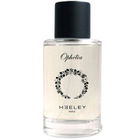
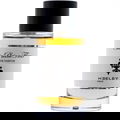
James Heeley's Ophelia takes this imagery to a more carnal level, centering this fragrance around the blatantly sensual note of Tuberose.
"Whereas for Hamlet madness is metaphysical, linked with culture, for Ophelia it is a product of the female body and female nature. . . . Ophelia's virginal and vacant white is contrasted with Hamlet's scholar's garb, his 'suits of solemn black.' Her flowers suggest the discordant double images of female sexuality as both innocent blossoming and whorish contamination; she is the 'green girl' of pastoral, the virginal 'Rose of May' and the sexually explicit madwoman who, in giving away her wild flowers and herbs, is symbolically deflowering herself. . . . The mad Ophelia's bawdy songs and verbal license, while they give her access to 'an entirely different range of experience' from what she is allowed as the dutiful daughter, seem to be her one sanctioned form of self-assertion as a woman, quickly followed, as if in retribution, by her death." (Elaine Showalter, "Representing Ophelia")
As a fragrance, Ophelia is many things to me but most of all a superb rendition of my favorite note in perfumery. Tuberose has such history ... The Victorians forbade young girls of inhaling the scent in the fear they might have a spontaneous orgasm! Roja Dove is sited as saying that Tuberose is really loose, the "harlot of perfumery". If this is the case then I have only one utterance ... 'bring on the harlotry!"
James Heeley has recognized the mesmerizing quality of this flower and softened its power to acceptable levels. This is quite a statement of love from me ... someone who likes their Tuberose bold and brave ... and intrusive!! Ophelia is soft, yet strident ... quite an enigma!!
I very seldom fall for a fragrance at first sniff. Ophelia has bewitched me ... and I MUST have her!!
"Ophelia enters with her hair and whole figure entwined with chains of flowers; and in her thin outer skirt, she carries a mass of them. She advances slowly with the strange light of insanity in her eyes, sits down upon the floor, and plays with the flowers in a childish way, as she sings. Then she arises, distributes rosemary, pansies, fennel, columbine and rue, sings her last song, loiters a moment after her parting benediction, and runs out in a burst of mad laughter." (paraphrased from Wikipedia)
James Heeley's Ophelia takes this imagery to a more carnal level, centering this fragrance around the blatantly sensual note of Tuberose.
"Whereas for Hamlet madness is metaphysical, linked with culture, for Ophelia it is a product of the female body and female nature. . . . Ophelia's virginal and vacant white is contrasted with Hamlet's scholar's garb, his 'suits of solemn black.' Her flowers suggest the discordant double images of female sexuality as both innocent blossoming and whorish contamination; she is the 'green girl' of pastoral, the virginal 'Rose of May' and the sexually explicit madwoman who, in giving away her wild flowers and herbs, is symbolically deflowering herself. . . . The mad Ophelia's bawdy songs and verbal license, while they give her access to 'an entirely different range of experience' from what she is allowed as the dutiful daughter, seem to be her one sanctioned form of self-assertion as a woman, quickly followed, as if in retribution, by her death." (Elaine Showalter, "Representing Ophelia")
As a fragrance, Ophelia is many things to me but most of all a superb rendition of my favorite note in perfumery. Tuberose has such history ... The Victorians forbade young girls of inhaling the scent in the fear they might have a spontaneous orgasm! Roja Dove is sited as saying that Tuberose is really loose, the "harlot of perfumery". If this is the case then I have only one utterance ... 'bring on the harlotry!"
James Heeley has recognized the mesmerizing quality of this flower and softened its power to acceptable levels. This is quite a statement of love from me ... someone who likes their Tuberose bold and brave ... and intrusive!! Ophelia is soft, yet strident ... quite an enigma!!
I very seldom fall for a fragrance at first sniff. Ophelia has bewitched me ... and I MUST have her!!
3 Comments


Top Notes
Green notes
Water lily
Heart Notes
Tuberose
Jasmine
Ylang-ylang
Base Notes
Moss
White musk
Ambergris


Marieposa
Yatagan
Jumi
Irini
Gerdi
Sabce
Heikeso
Seejungfrau
Seerose
Parma