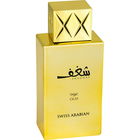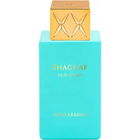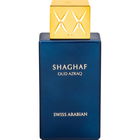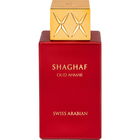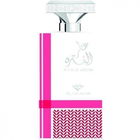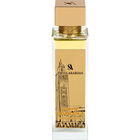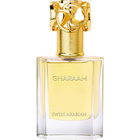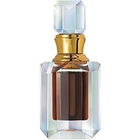


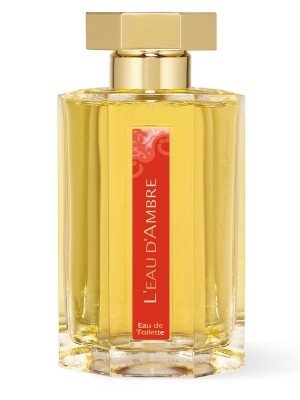
 Top Notes
  Cardamom
 Black pepper
 Coriander
 Vulcanized Notebook
 Heart Notes
  Labdanum
 Geranium
 Indonesian patchouli
 Base Notes
  Benzoin
 Tonka bean
 Vanilla
 Musk
Musk
06/28/2018

jtd
484 Reviews

jtd
Very helpful Review
7
l'eau d'ambre
Back in the day, counter-culturalism had style. The movement’s cri de coeur that the personal was political gave fashion new political significance. Style became a function of free speech and Hippies and Yippies groomed and dressed both to identify themselves to fellow travelers and to scare the stiffs. But costume wasn’t the only prop. The culture war of the ’60s and ’70s took place on an olfactory level.
As much as hair and costume, scent drew the line between us and them. To the straights, head shop scents like musk, patchouli and amber oils meant poor hygiene and the imagined miasma of a Haight Ashbury commune. To counter-culturalists traditional perfumes and colognes would have been the stink of The Man. A problem with this sort of transactional style is that it’s easy to co-opt symbols and drain them of their meaning and intent. In 1967, bellbottoms and peasant blouses were far out. By 1972 the patterns for them could probably be found in the back of issues of Family Circle Magazine. In the early ’70s amber was the scent of rebellion. By 1978, the hippie-amber gave way to fancy French perfume. If niche was an alternative to the mainstream perfume, the scents embraced within the counter-culture were a logical place for the early indies to plant their flag and l’Artisan Parfumeur had already made its reputation on amber. The brand’s famous amber balls were its first product when the line launched in 1976. Perfumes didn’t enter the line-up until 1978 when l’Eau d’Ambre launched the perfume line, along with Mure et Musc, Santal, Vanilia, Tuberose.
The perfume is simple in that it derives from its principal materials–at no moment during its evolution would you ever imagine that you’re not smelling a potent amber-patch accord. Yet even as early as 1978, Jean-Claude Ellena’s ability to make resins sheer was apparent. A mercifully unsweetened dose of vanilla keeps the perfume from ever falling into goopy head shop syrup. The perfume has been attributed to both Ellena and Jean-François Laporte. Perhaps Ellena was perfumer and Laporte was artistic director, as was the case with some of the other l’Artisan perfumes. The two might have looked to the head shop for inspiration, but l’Eau d’Ambre was no sloppy copy. As an artist trained in compositional rigor and the dynamics of his materials Ellena managed to create something that, as hippies would appreciate, smells really fucking good, but stands up to the interrogation of olfactory art.
Ellena navigated the risks of his chosen materials smartly, avoiding both the lotus-eating laziness of head shop oils and the orientalist theatricality of the Shalimar set. He focussed on labdanum’s mineralic side, giving the perfume a whiff of paint or putty that reminds me of the scent of an artist’s studio. The top and heartnotes are boosted by geranium. In the setting of an overtly resinous accord geranium acts like a breeze that blows out the cobwebs that can gather around patchouli and labdanum. It counteracts the density of the central amber accord, a trick performed by bergamot in oriental perfumes from Emeraude to Youth Dew to Opium. l’Eau d’Ambre’s aromatic geranium creates a tension that distinguishes the perfume from its head-bobbing hippie predecessors. Rather than complicate the composition, geranium streamlines it, reminding the nose that despite the perfume’s simplicity it has deliberate point of view.
L’Eau d’Ambre’s success lies in its simplicity, perhaps one reason that it has weathered materials restrictions and any possible reformulation so gracefully. The materials are allowed to state their own case without adornment or needless complexity. L’Eau d’Ambre wasn’t the first indie perfume but it was a frontrunner and demonstrated how well the niche movement bridged the desire for new, clear, materials-based fragrances and the long history of oriental perfumes.
from scenthurdle.com
As much as hair and costume, scent drew the line between us and them. To the straights, head shop scents like musk, patchouli and amber oils meant poor hygiene and the imagined miasma of a Haight Ashbury commune. To counter-culturalists traditional perfumes and colognes would have been the stink of The Man. A problem with this sort of transactional style is that it’s easy to co-opt symbols and drain them of their meaning and intent. In 1967, bellbottoms and peasant blouses were far out. By 1972 the patterns for them could probably be found in the back of issues of Family Circle Magazine. In the early ’70s amber was the scent of rebellion. By 1978, the hippie-amber gave way to fancy French perfume. If niche was an alternative to the mainstream perfume, the scents embraced within the counter-culture were a logical place for the early indies to plant their flag and l’Artisan Parfumeur had already made its reputation on amber. The brand’s famous amber balls were its first product when the line launched in 1976. Perfumes didn’t enter the line-up until 1978 when l’Eau d’Ambre launched the perfume line, along with Mure et Musc, Santal, Vanilia, Tuberose.
The perfume is simple in that it derives from its principal materials–at no moment during its evolution would you ever imagine that you’re not smelling a potent amber-patch accord. Yet even as early as 1978, Jean-Claude Ellena’s ability to make resins sheer was apparent. A mercifully unsweetened dose of vanilla keeps the perfume from ever falling into goopy head shop syrup. The perfume has been attributed to both Ellena and Jean-François Laporte. Perhaps Ellena was perfumer and Laporte was artistic director, as was the case with some of the other l’Artisan perfumes. The two might have looked to the head shop for inspiration, but l’Eau d’Ambre was no sloppy copy. As an artist trained in compositional rigor and the dynamics of his materials Ellena managed to create something that, as hippies would appreciate, smells really fucking good, but stands up to the interrogation of olfactory art.
Ellena navigated the risks of his chosen materials smartly, avoiding both the lotus-eating laziness of head shop oils and the orientalist theatricality of the Shalimar set. He focussed on labdanum’s mineralic side, giving the perfume a whiff of paint or putty that reminds me of the scent of an artist’s studio. The top and heartnotes are boosted by geranium. In the setting of an overtly resinous accord geranium acts like a breeze that blows out the cobwebs that can gather around patchouli and labdanum. It counteracts the density of the central amber accord, a trick performed by bergamot in oriental perfumes from Emeraude to Youth Dew to Opium. l’Eau d’Ambre’s aromatic geranium creates a tension that distinguishes the perfume from its head-bobbing hippie predecessors. Rather than complicate the composition, geranium streamlines it, reminding the nose that despite the perfume’s simplicity it has deliberate point of view.
L’Eau d’Ambre’s success lies in its simplicity, perhaps one reason that it has weathered materials restrictions and any possible reformulation so gracefully. The materials are allowed to state their own case without adornment or needless complexity. L’Eau d’Ambre wasn’t the first indie perfume but it was a frontrunner and demonstrated how well the niche movement bridged the desire for new, clear, materials-based fragrances and the long history of oriental perfumes.
from scenthurdle.com
1 Comment






 Bastian
 Licorice
 Heikeso
 FrauKirsche
 Mörderbiene
 Augusto
 Vrabec
 Stulle
 Rieke2021
 PontNeuf